In October 2016, a house on Broadmoor Bluffs Drive sold for $506,000. The buyer, a military retiree relocating from Fort Bliss, Texas, wanted a home with a view. Two and a half years later, a Fourth Judicial District judge voided that sale. The ruling found the previous owner had committed fraud by failing to disclose what he knew: the home sat on an active landslide. The court ordered him to buy the house back at the original price plus closing costs. Whether he could actually pay became its own separate fight.
What makes that case worth knowing isn't the courtroom drama. It's what the ruling exposed about how information moves, or doesn't, in a Colorado Springs real estate transaction. This wasn't a builder quietly cutting corners. Neighbors on that same street had watched the ground shift for years. Homes nearby had already been condemned. The city had applied for federal buyout money for the block. None of that was secret. It just never reached the one person who needed it before closing day.
What the disclosure form actually promises
Colorado doesn't legally require a Seller's Property Disclosure form, but nearly every transaction includes one anyway, as part of the standard Contract to Buy and Sell Real Estate that the state's Division of Real Estate maintains. Buyers tend to read a clean SPD as a green light. That reading skips a detail that matters here more than in most markets.
Colorado's disclosure duty, established through a Court of Appeals case known as Gattis v. McNutt, holds that sellers of residential property must disclose latent defects they actually know about, regardless of what's checked on the form. The flip side of that rule is just as important: if a seller genuinely doesn't know about a problem, silence isn't a violation. A "No" box next to foundation issues can mean the house is sound, or it can mean the seller never had reason to look closely. The form can't tell you which.
Why this particular question carries more weight here
Colorado Springs sits on Pierre Shale and related claystone formations that run the length of the Front Range. Those formations carry high concentrations of clay minerals, smectite and bentonite among them, that absorb water and swell, then dry out and shrink, in a cycle that repeats every time moisture conditions change. The Colorado Geological Survey has documented swell pressures in these formations reaching 30,000 pounds per square foot, and a volume increase of just 3 percent is enough to start damaging a structure.
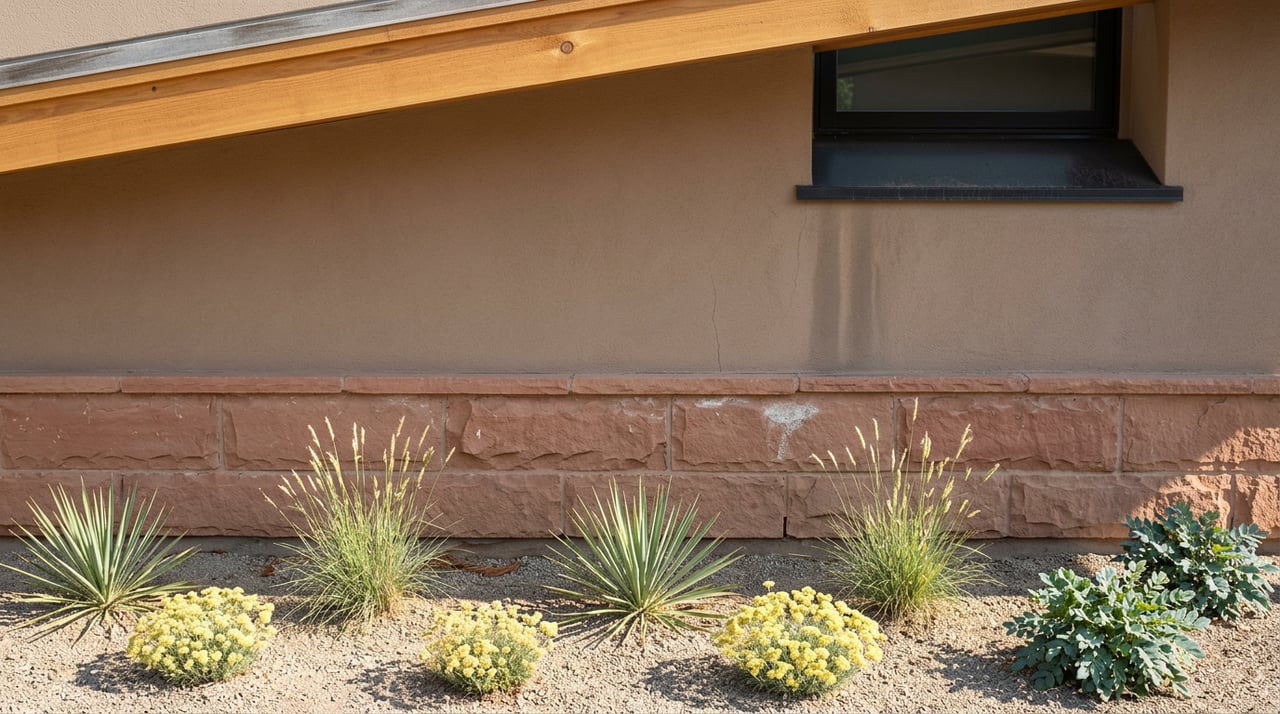
Not every building responds the same way. Heavily loaded structures with deep, engineered foundations, a downtown high-rise, for instance, tend to shrug off this kind of soil movement. Lightly loaded buildings on shallow footings don't have that luxury, and that's most single-family homes. On the flatter parts of the metro, that shows up as cracked drywall, sticking doors, a driveway that no longer sits flush. On the hillsides west of Interstate 25, the same clay chemistry has a more dramatic version: instead of cracking a foundation in place, saturated shale can let an entire slope start to slide.
Forty years on the west side
That second version has a documented history in Colorado Springs, one that runs from state maps drawn in the 1970s to a court ruling in 2019.
| Year | What happened |
|---|---|
| 1973 | State maps first identify landslide-susceptible ground running from Broadmoor Bluffs to Rockrimmon |
| 1977 | Follow-up mapping flags Broadmoor Bluffs and Skyway Park by name as problem areas |
| 1985 | A University of Colorado Colorado Springs study warns that construction is continuing in the foothills despite documented risk |
| 1994 | The state geologist urges the city to take immediate administrative action in the Mountain Shadows area; the city calls it a private matter |
| 1995 | The Garrison landslide destroys three homes on Regency Drive |
| 1996 | A year after the Garrison landslide, the city adopts its geological hazards ordinance, requiring a licensed geologist or engineer to assess hazard risk on new building sites |
| 1999 | Record rainfall triggers another wave of slides; the city buys out and removes dozens of homes at a cost of roughly $6.5 million through a HUD-administered program |
| 2015 to 2016 | A rain event totaling 27.58 inches, the second-heaviest on record after 1999, reactivates slides in Lower Skyway and Broadmoor Bluffs; homes on Zodiac Drive, Constellation Drive and Haversham Drive are condemned |
| 2019 | A judge voids the 2016 sale of a Broadmoor Bluffs Drive home, ruling the seller committed fraud by not disclosing the landslide beneath it |
A senior engineering geologist with the Colorado Geological Survey summed up the west side's geology more plainly than any market report would.
"Build anything west of I-25, and you start getting some issues."
By the time the most recent round of buyouts closed, the city had approved demolition for up to 19 homes on Broadmoor Bluffs Drive and in Lower Skyway. Much of that ground is converting to permanent open space. By law, nothing can be built there again, a quiet ending to four decades of a very public problem.
What actually protects you today
The 1996 ordinance is still the backbone of how Colorado Springs handles this, and it was updated again in 2025. Current city code requires a licensed geologist or geotechnical engineer to sign off on hazard studies for qualifying development sites, with findings forwarded to the Colorado Geological Survey for review. El Paso County maintains its own geology and soils report requirements for new subdivisions, most recently revised in October 2023, covering everything from surficial deposits to expansive clay content to slope stability. State law defines expansive soil and unstable slopes as geologic hazards subject to this kind of review.
Here's the gap worth understanding. That entire regulatory structure exists to catch problems before a subdivision gets built. It says very little about what happens when an existing home, one built decades ago, changes hands. That's the transaction where a buyer's own due diligence matters most, because the county checklist already did its job before that house had an address.
If you're buying an existing home here, four things are worth doing before you sign off on the inspection period:
Ask the seller or the county building department for the home's original soils or geotechnical report. That document tells you what foundation the house was actually engineered for, which matters more than any general statement about the neighborhood.
Ask whether the property falls within a mapped landslide susceptibility area. The Colorado Geological Survey maintains mapping for the city that covers exactly this question.
Treat a clean SPD as a starting point, not a clearance. Given the actual-knowledge limit built into Colorado's disclosure law, a seller who never lived through a wet spring on the property may genuinely have nothing to check.
If the home sits west of I-25, predates 1996, or shows any sticking doors, stair-step cracking, or driveway heaving, budget for an independent structural evaluation before you release the objection deadline.
The math on the inspection objection deadline
A standard Colorado Springs home inspection runs two to four hours and typically starts between $400 and $500. Adding a foundation-specific evaluation costs more, but it's a rounding error next to what a real problem costs to fix. One documented Front Range new-construction case found that over-excavating and replacing unstable soil added roughly 10 percent to the total build cost and six months to the timeline. Deeper, engineered pier systems on individual lots have run past $100,000 in other reported cases.
Home inspections aren't legally required in Colorado, but the inspection objection deadline in the purchase contract is the buyer's one real chance to renegotiate or walk away based on a home's condition. Waiving it to win a competitive offer is, functionally, a bet that the seller's paperwork carries the same weight as a geologist's opinion. The history above suggests that bet doesn't always pay off.
A few questions worth asking directly
Does this mean every Colorado Springs home has a foundation or slope problem? No. Most homes here were engineered for the soil beneath them and perform fine for decades. The risk concentrates in specific conditions: older construction that predates the 1996 ordinance, homes on the steeper hillsides west of I-25, and any property where drainage patterns changed after the original build.
Is this only a Broadmoor or west-side issue? The clay chemistry behind it is a Front Range condition, not a single-neighborhood one. Expansive soil and foundation movement show up in listings across Monument, Woodland Park and Manitou Springs too. The landslide history above is specific to the hillside geology west of I-25, but the underlying soil is present across the metro.
Does a clean inspection mean I'm in the clear? A standard inspection catches visible movement, not what's happening several feet underground. If a house shows any of the classic signs, ask for a structural engineer's opinion before your objection deadline passes, not after.
Whether you're buying your first home in the Springs or selling one you've lived in for twenty years, the soil question deserves the same seriousness as the price and the school district. If you want a second set of eyes on a specific address, or help reading a geotech report before you write an offer, Colorado Springs Collective is a call away.